Laboratory automation used to mean large robotic systems in high-volume clinical labs. Today it covers much more: any use of technology to run lab tasks with less manual work, from a single instrument following a method on its own to a fully connected lab. This article explains what laboratory automation is, its advantages, the main types, and how to get started.
What is laboratory automation?
Laboratory automation is the use of instruments, software and control systems to carry out lab work with minimal human intervention. That can mean moving and preparing samples, running a method on an instrument, capturing results, or controlling a process based on live measurements. The purpose is to make lab work faster, more consistent and easier to document, so scientists spend their time on science rather than on repetitive tasks.
Why is lab automation important?
Labs are under pressure to deliver more results, faster, with full traceability. Manual work makes that hard: repetitive tasks take staff time, results copied by hand introduce errors, and processes that depend on one experienced person are fragile. Automation addresses all three.
What are the advantages of laboratory automation?
- Fewer errors. When data is captured directly from the instrument and steps run the same way every time, transcription and handling errors drop.
- Higher productivity. Instruments can run methods unattended, and staff are freed for more valuable work.
- Consistent, reproducible results. A method that is defined once runs identically on every run and at every site.
- Better traceability. Every step, reading and change is recorded automatically, which simplifies audits.
- Safer working conditions. Less repetitive manual handling reduces strain and exposure.
What are the types of automation?
In general engineering terms, automation is often split into three types: fixed automation, built for one task; programmable automation, which can be reprogrammed for different batches; and flexible automation, which switches between tasks with little or no downtime.
In the lab, it is more useful to think about scope:
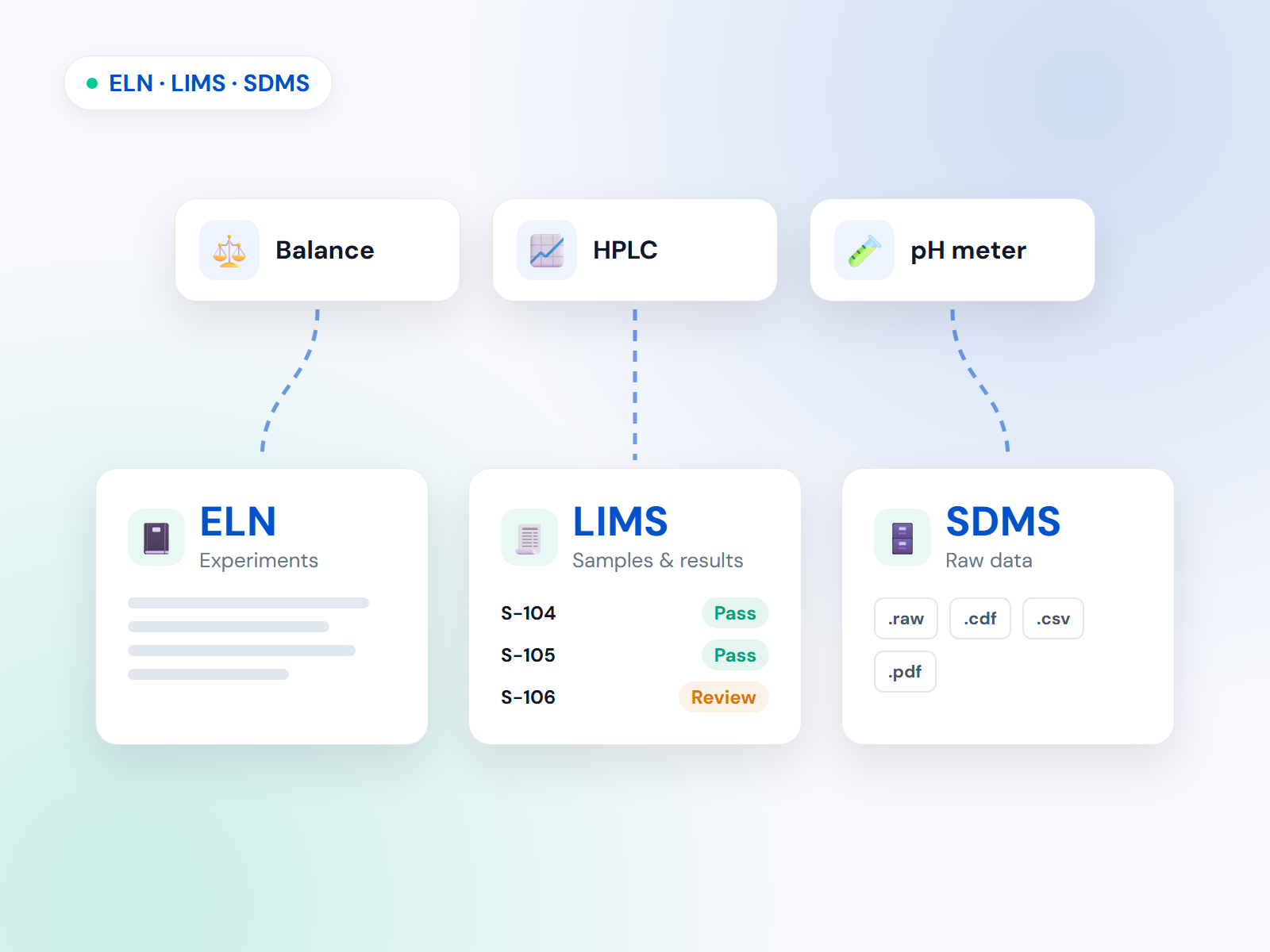
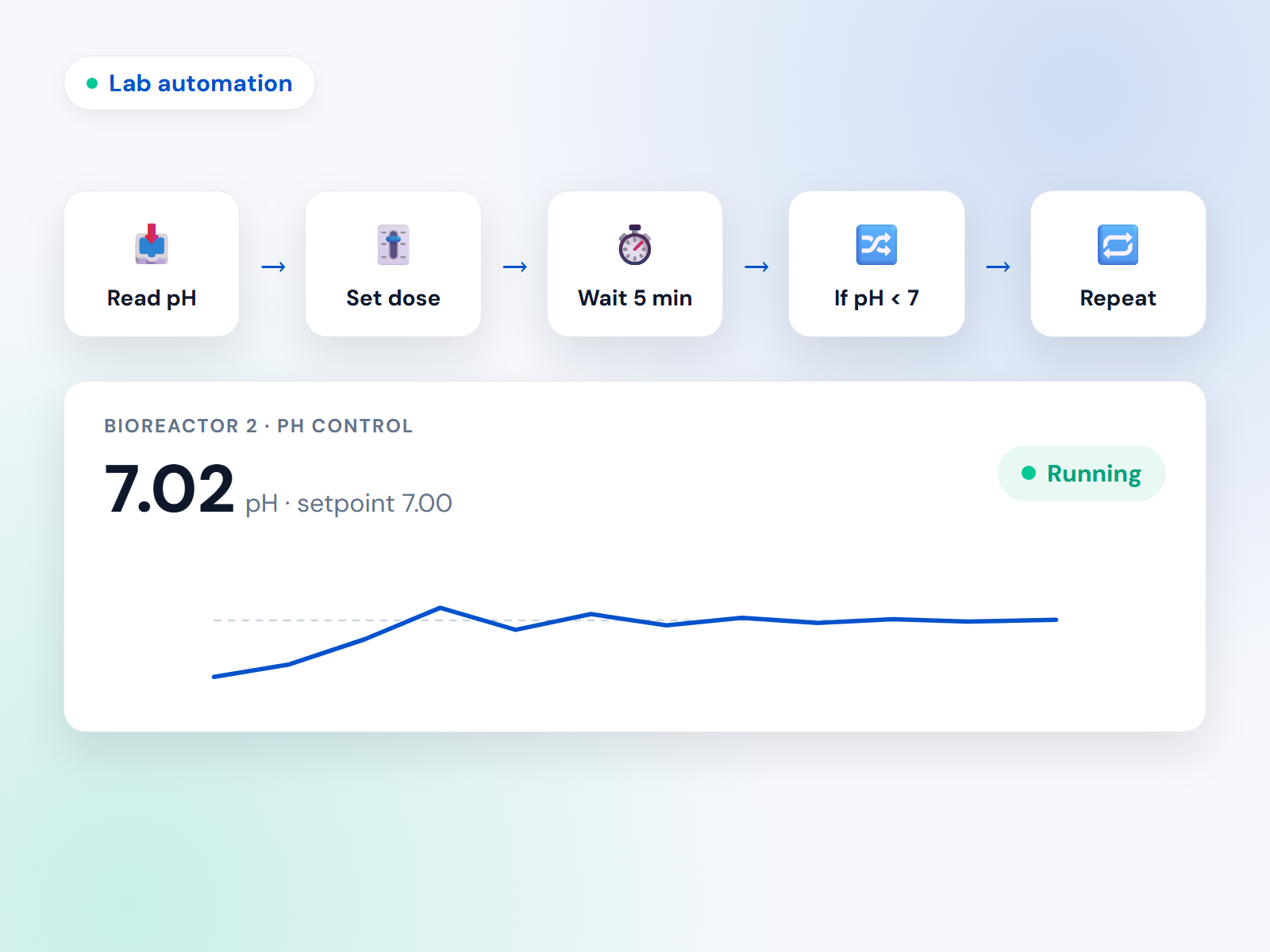
- Task-targeted automation automates one step or instrument, such as a balance that sends its readings straight to the record, or a bioreactor that follows a defined method.
- Modular or workflow automation connects several instruments and steps into a procedure, often with software that guides operators and captures data along the way.
- Total laboratory automation (TLA) automates the whole process, typically in high-volume clinical labs, with robotic systems that sort, prepare, transport and analyse specimens.
When did laboratory automation start?
Laboratory automation began in the 1950s, when the first automated analysers appeared in clinical chemistry. Since then it has grown alongside laboratory information management systems (LIMS), robotics and, more recently, connected instruments and cloud software that make automation accessible to labs of every size.
Why is automation needed in labs now?
The amount of data labs produce keeps growing, regulatory expectations for data integrity keep rising, and experienced staff are in short supply. At the same time, connected instruments and no-code software have made automation far cheaper to adopt than large robotic installations. For many labs, the question is no longer whether to automate, but where to start.
Where to start with lab automation
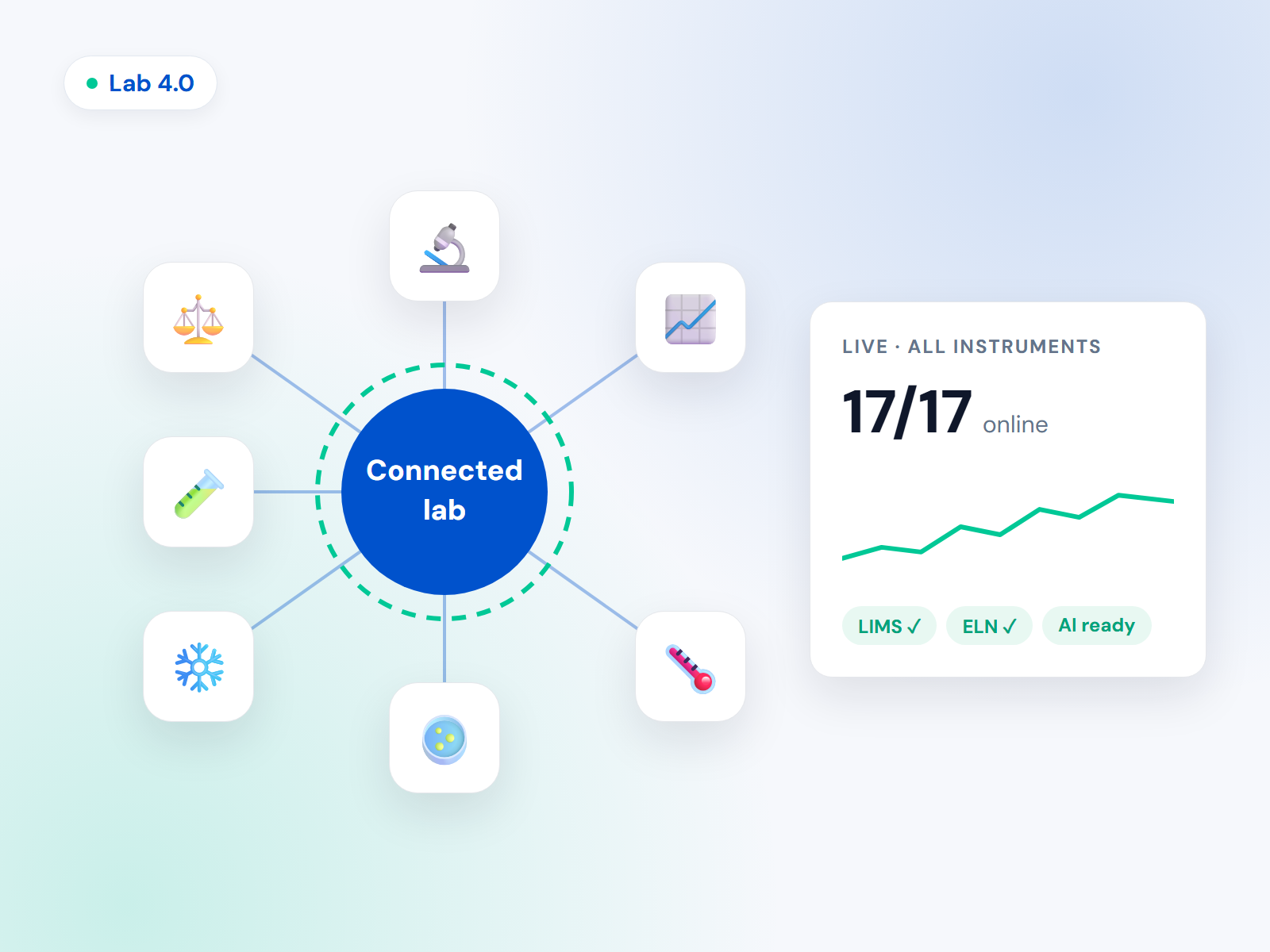
- Connect your instruments. Automation needs data. Start by connecting the instruments you already have, including older ones, so their readings are captured automatically.
- Remove manual data handling. Send results straight to your LIMS, ELN or SDMS instead of retyping them.
- Automate the repetitive steps. Pick a method that runs often and the same way every time, and let the instrument run it.
- Standardise procedures. Turn SOPs into guided digital workflows so every run follows the approved steps.
Inniti supports each of these steps. It connects instruments from any manufacturer, new or legacy, and its no-code laboratory automation software lets you build methods from simple rule-based actions to PID-controlled feedback loops. Digital SOP workflows guide operators step by step, and real-time monitoring keeps every run visible. If you are planning the bigger picture, see how to build a digital lab around the instruments you already have.
Ready to see what you could automate? Talk to our team.