Ask three lab managers where their data lives and you may get three answers: the ELN, the LIMS and the SDMS. The three systems overlap, and vendors increasingly combine them, but each was built for a different job. Knowing the difference helps you decide which you need, and how your instruments should feed them.
What is a LIMS?
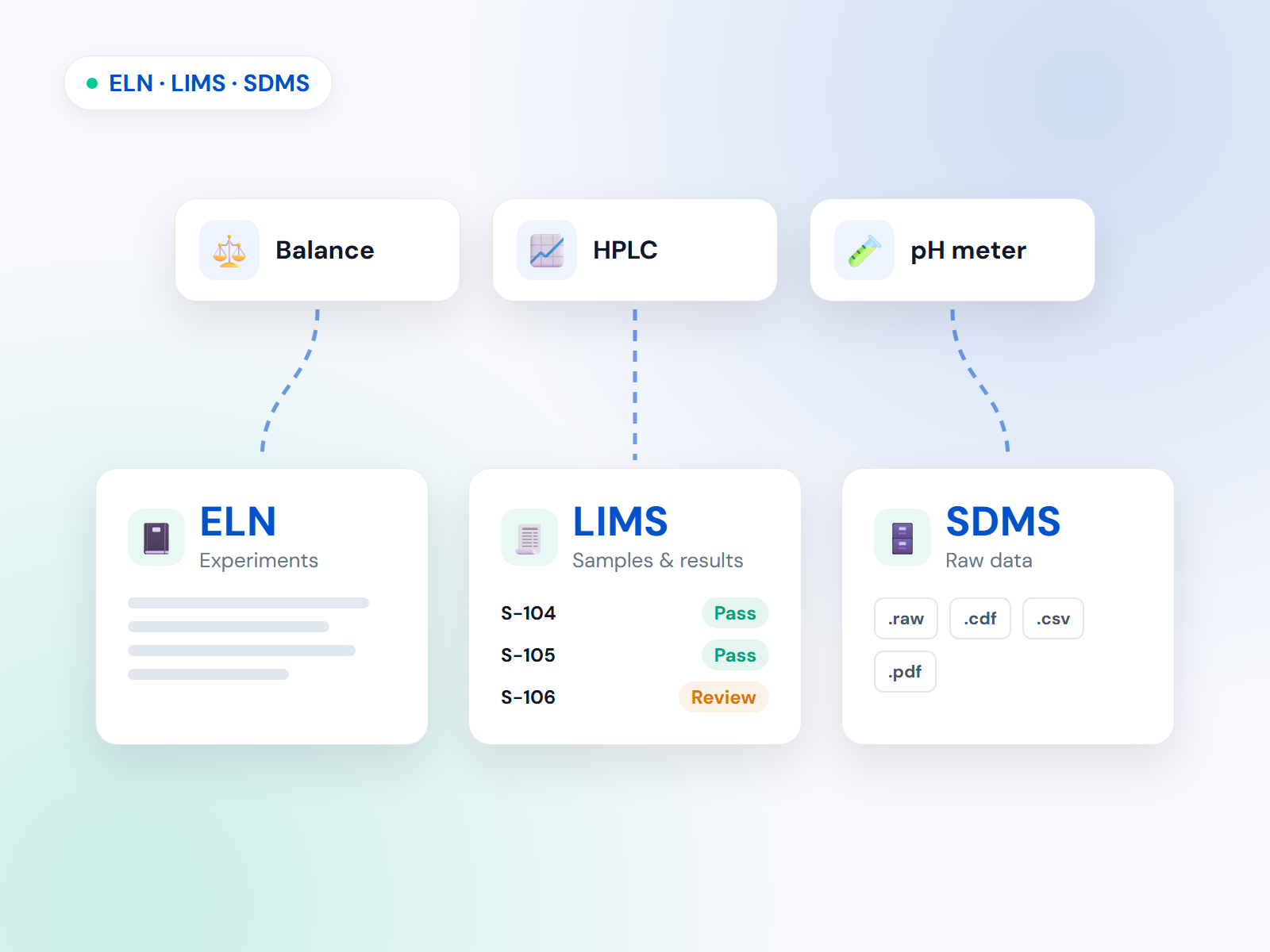
A laboratory information management system (LIMS) manages samples and structured results. It registers samples, assigns tests, records results against specifications, manages workflows and approvals, and produces reports and certificates. LIMS are strongest in repeatable, high-volume work such as QC, contract testing and regulated production labs.
We cover LIMS in more detail in What Is a LIMS, and How Do Lab Instruments Connect to It?
What is an ELN?
An electronic lab notebook (ELN) replaces the paper notebook. It records experiments, protocols, observations and conclusions, usually in a flexible, document-like format. ELNs are strongest in research and development, where every experiment is a little different and context matters as much as the numbers.
What is an SDMS?
A scientific data management system (SDMS) captures, stores and archives the raw data and files that instruments produce, such as chromatograms, spectra and result files. It keeps the original records safe and searchable for the long term, which matters for data integrity and audits.
ELN vs LIMS: the key differences
- Focus. A LIMS is sample-centric; an ELN is experiment-centric.
- Structure. A LIMS works with structured, predefined tests and specifications; an ELN allows free-form documentation.
- Typical users. LIMS are common in QC and production labs; ELNs in R&D.
- Output. A LIMS produces results, reports and certificates; an ELN produces a documented record of the experiment and its reasoning.
The SDMS sits underneath both, holding the raw data the results are based on.
Do you need all three?
Not always. A QC lab may run mainly on a LIMS, an R&D group mainly on an ELN, and many organisations use both, with an SDMS for raw data. Some products combine LIMS and ELN functions in one platform. What every setup has in common is that the data starts at the instruments.
How instrument data should reach your LIMS, ELN and SDMS
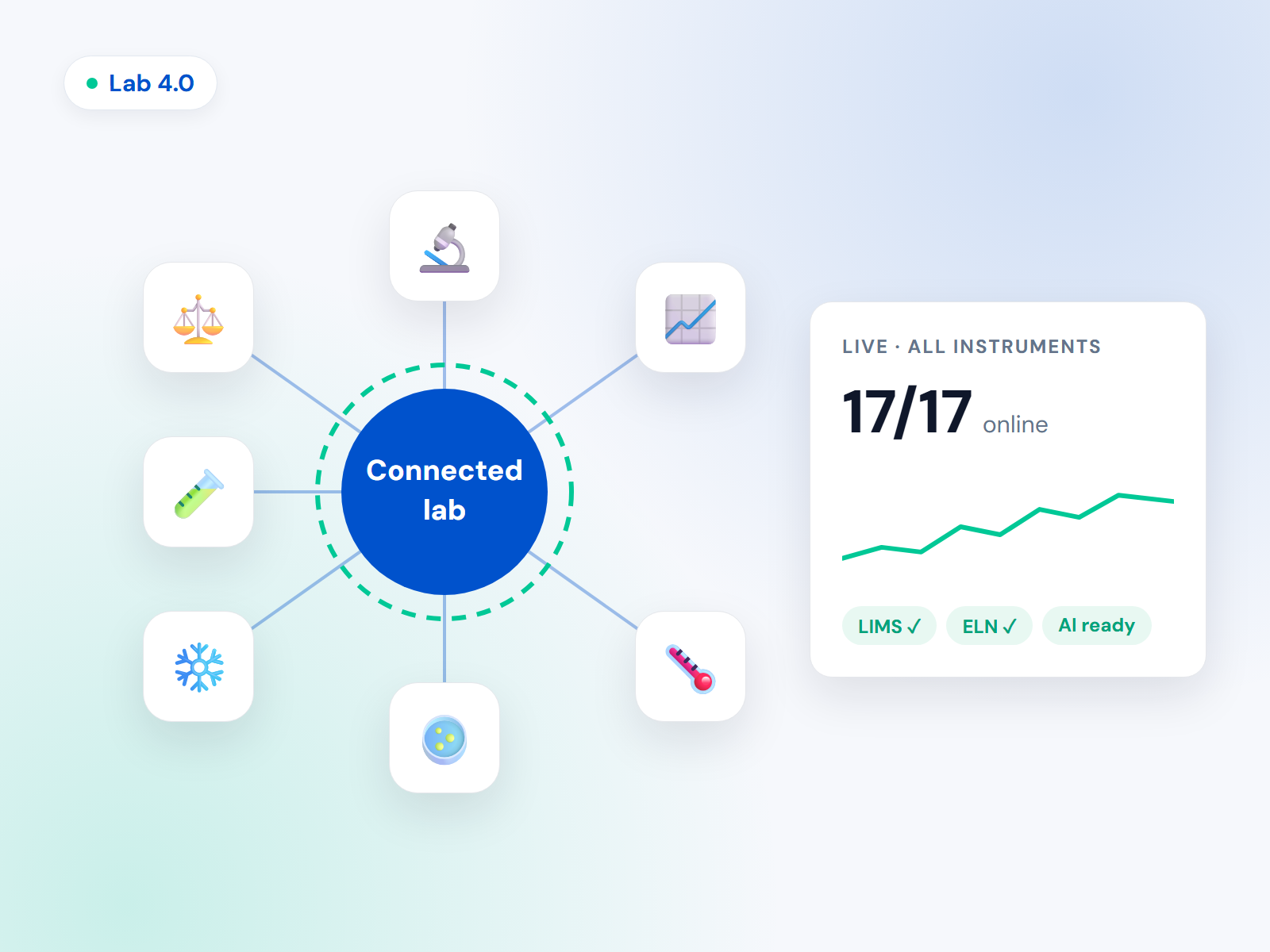
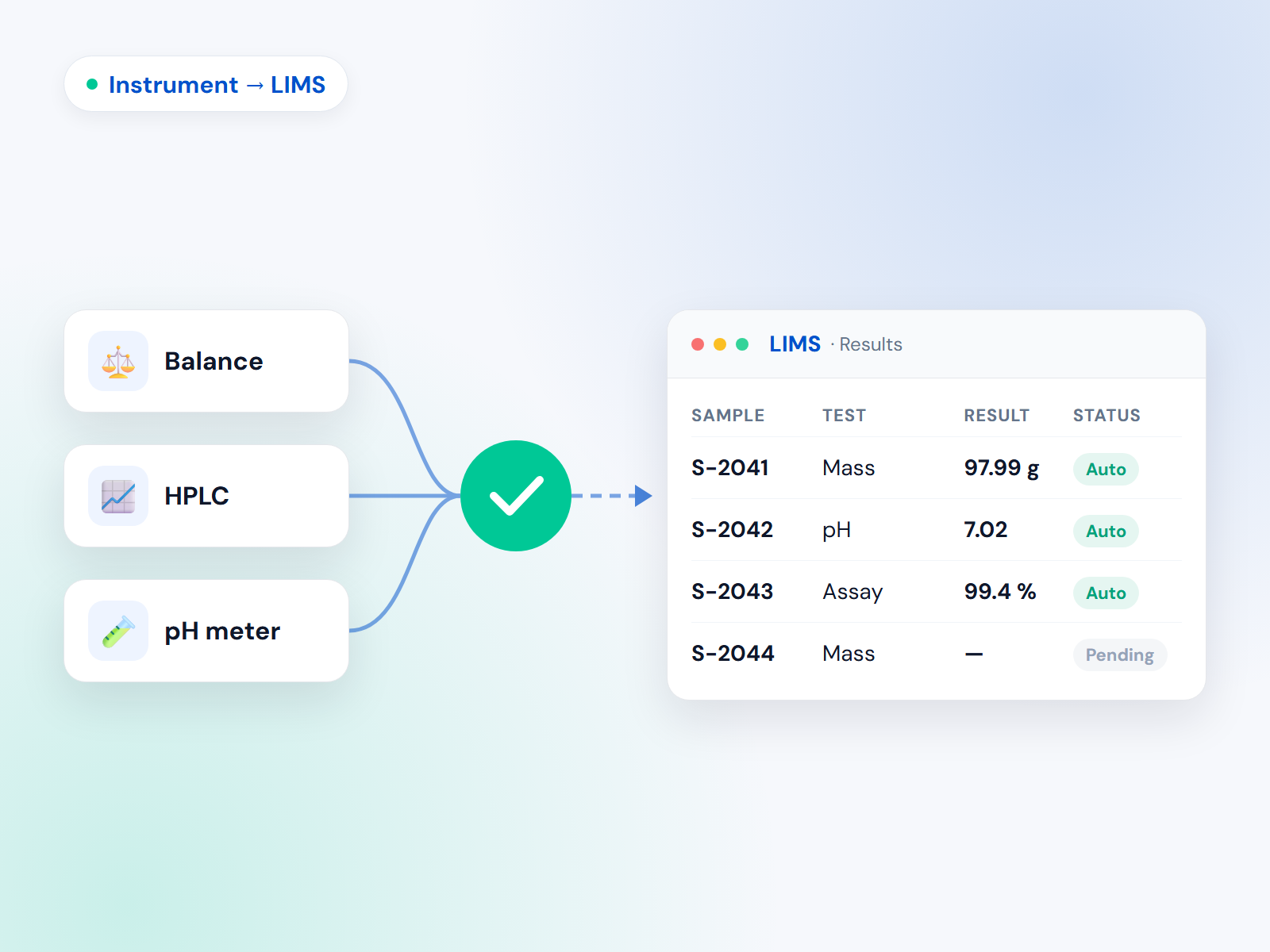
If results are typed in by hand, it does not matter how good the system is: transcription errors and gaps in the audit trail come with it. The better route is to capture data directly from the instruments and send it to whichever system needs it.
That is what Inniti does. It connects instruments from any manufacturer, new or legacy, structures the data following FAIR principles, and delivers it to any LIMS, ELN or SDMS with an API, including chromatography data systems such as Waters Empower and Thermo Scientific Chromeleon. See the full list on our LIMS and ELN integration page, or read how we approach laboratory data management.
Not sure which systems your instruments should feed? Talk to our team.