Data integrity is one of the most common topics in regulatory inspections of GxP labs. The yardstick inspectors use is ALCOA+, a set of principles describing what trustworthy data looks like. This guide explains each principle, where everyday lab practice puts it at risk, and how to make it easier to meet.
What is ALCOA?
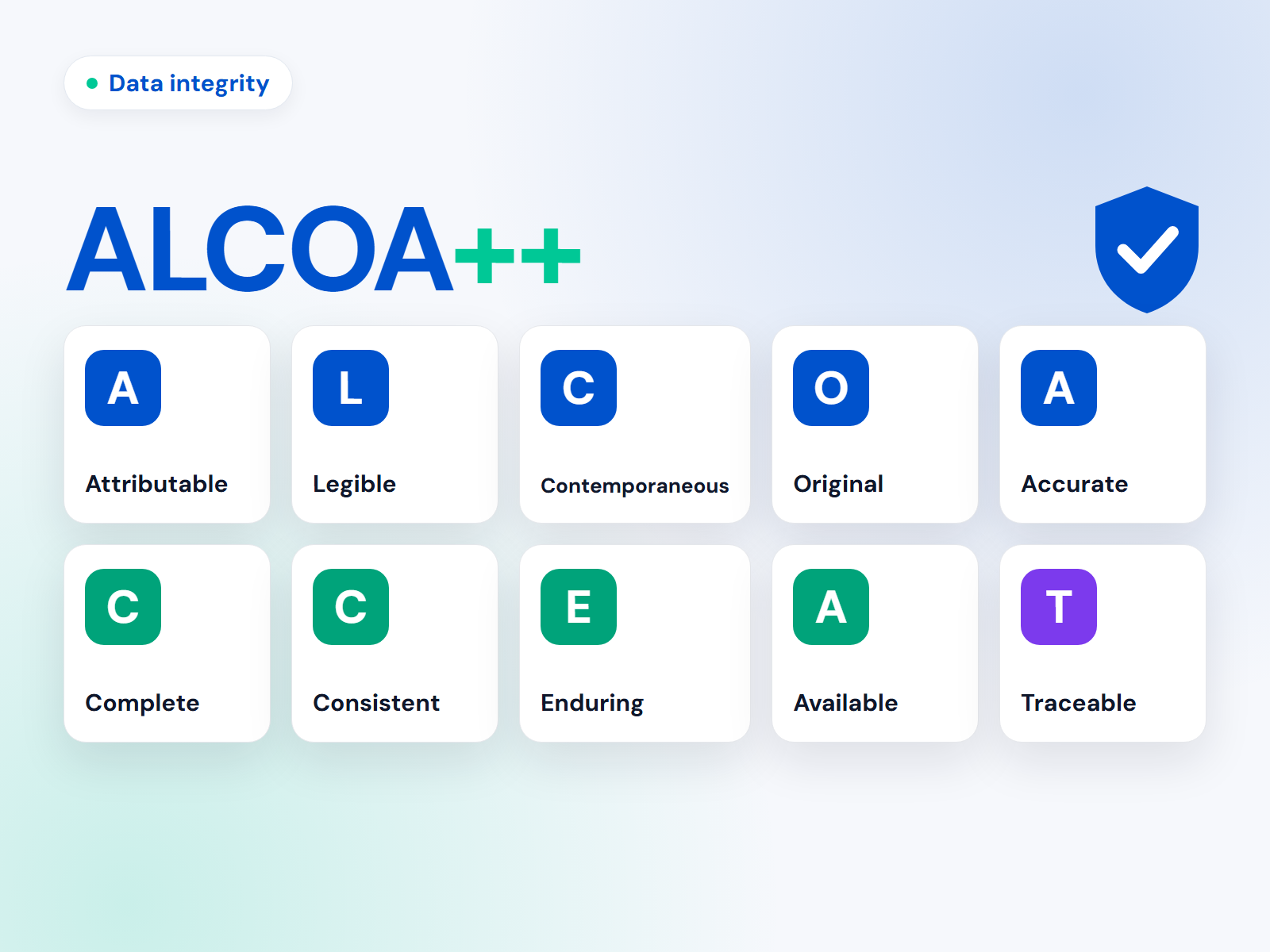
ALCOA is an acronym for five properties that data should have:
- Attributable: it is clear who recorded the data and which instrument produced it.
- Legible: the data can be read and understood for its whole lifetime.
- Contemporaneous: it was recorded when the work was done, not later from memory.
- Original: it is the first record, or a certified true copy.
- Accurate: it is correct, complete and free from errors.
What is ALCOA+?
ALCOA+ adds four more principles:
- Complete: all data is present, including repeats and failed runs.
- Consistent: events are recorded in order, with consistent timestamps.
- Enduring: the data lasts for the required retention period.
- Available: it can be retrieved for review and inspection when needed.
What is ALCOA++?
ALCOA++ is commonly used to add Traceable: every change to the data can be followed through an audit trail, from the original record to the final result.
Why ALCOA+ matters for GxP labs
Regulators including the FDA, the MHRA and the WHO expect GxP data to meet these principles, and data integrity findings are a frequent cause of warning letters and inspection observations. For electronic records in the US, 21 CFR Part 11 sets further expectations for audit trails, access control and electronic signatures.
Where manual processes break ALCOA+
The weak points are usually where people move data by hand:
- A value is read from an instrument display and written on paper, then typed into a LIMS later: the record is not contemporaneous, and the original may be lost.
- A transcription error slips through: the data is no longer accurate.
- A repeat measurement is not recorded: the data is no longer complete.
- No one can say which balance or pH meter produced a result: it is not attributable.
How connected instruments support data integrity
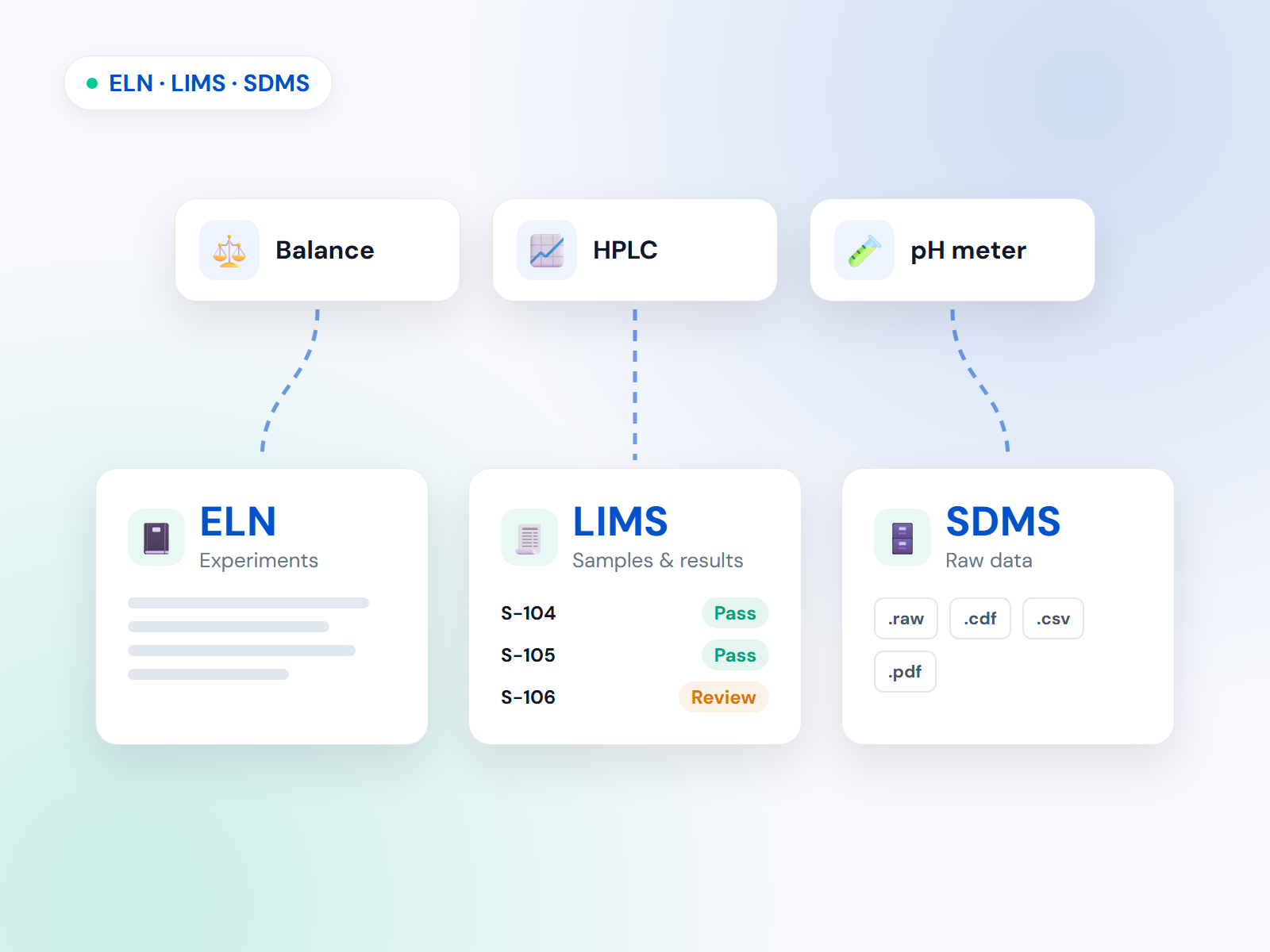
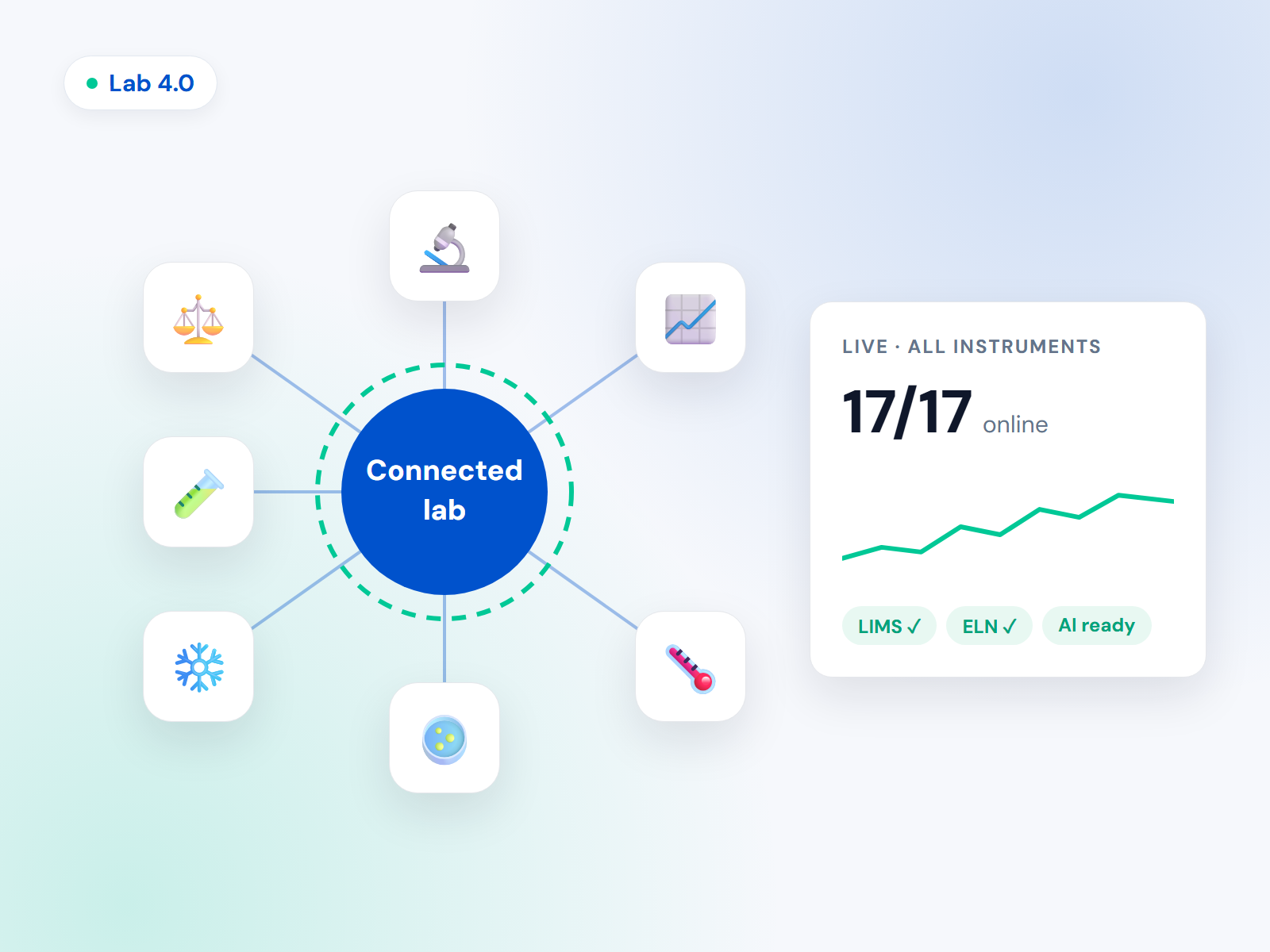
Capturing data directly from the instrument removes most of these risks. The reading is recorded the moment it is produced, with the instrument, time and user attached, and sent on without anyone retyping it. Each later action is written to an audit trail.
Inniti is built around this. Connected instruments send their readings automatically, sample tracking records every action with the time and the person, and digital SOP workflows make sure each step is followed and approved, giving an ALCOA+ audit trail for every sample and run. Read more about how this works in pharma labs.
Software alone does not make a lab compliant: procedures, training and validation matter too. But removing manual data handling closes the gaps that cause most data integrity findings.
Want to see where your lab's data integrity gaps are? Talk to our team.